
Comprehensive Emergency Preparedness Guide for 2026
This guide synthesizes current federal guidance and expert recommendations to help you prepare for civil unrest, supply chain disruptions, utility failures, communication outages, and financial system freezes. The key principle is layered redundancy: never rely on a single system for critical needs.
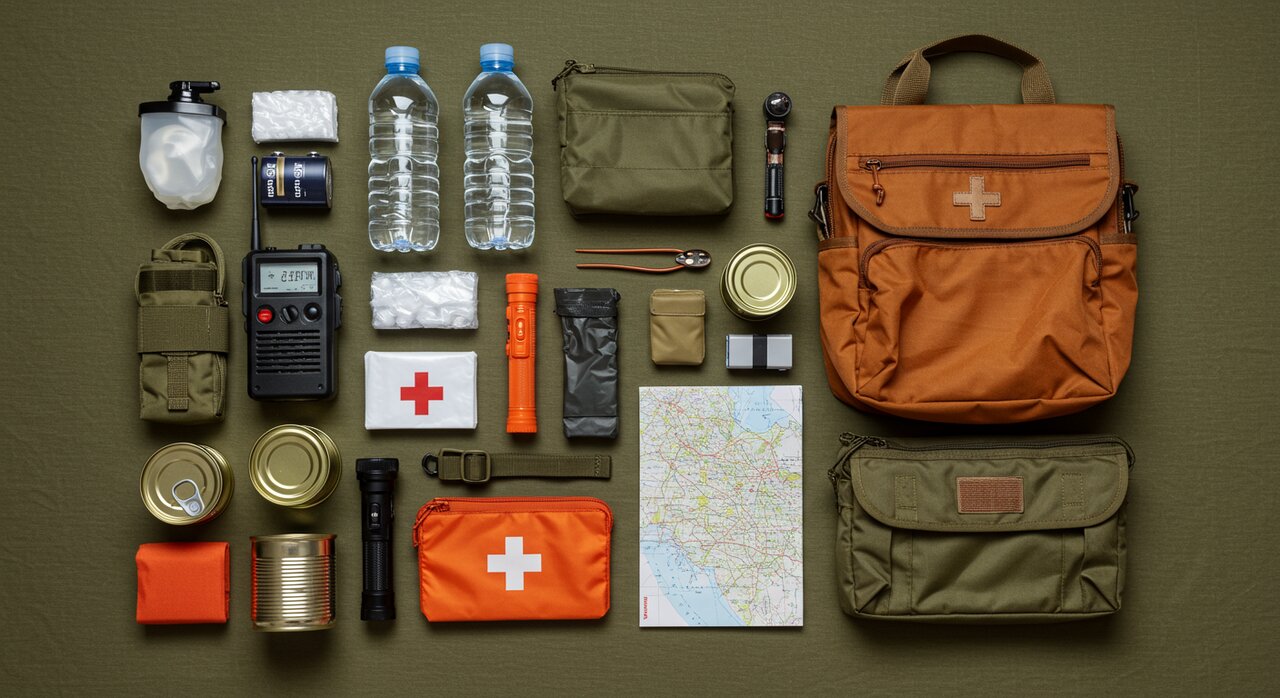
1. Civil Unrest Preparedness
Situational Awareness & Risk Assessment
Early Warning Systems:
- Sign up for local emergency alerts through your city/county emergency management office. Most jurisdictions offer text/email alerts for civil disturbances.[1]
- Monitor verified local news and police scanner apps (Broadcastify) for real-time updates.
- Use social media monitoring tools like TweetDeck to follow local hashtags and official accounts, but verify information before acting.[1]
Home Fortification
- Reinforce entry points: Install deadbolts, security bars for windows, and solid-core doors with reinforced frames.
- Create a "safe room": Interior room with reinforced door, supplies, and communication tools.
- Remove flammable materials from around your home's exterior.
- Install security cameras with local storage (not cloud-dependent) and motion-activated lights.[1]
Evacuation Planning
- Identify two evacuation routes from your neighborhood and practice them quarterly.
- Establish rally points: one nearby (within 1 mile) and one outside your city.
- Prepare "go-bags" (see Section 2) for each family member.
- Coordinate with trusted neighbors for mutual aid and communication.[1]
Legal & Safety
- Understand local laws regarding self-defense, curfews, and protest areas.
- Avoid confrontation; shelter in place is often safest during unrest.
- Document property with photos/video for insurance claims.[1]
Official Guidance:
- FEMA's "Civil Unrest Response" guidance for fire/EMS provides operational principles applicable to civilians: maintain situational awareness, have contingency plans, and coordinate with local authorities.[2]
- Secure Community Network checklist: https://www.securecommunitynetwork.org/resources/civil-unrest-guidance/[3]
2. Food Supply Disruption Preparedness
Stockpiling Strategy
Quantities:
- Minimum 3-month supply per person; 6-12 months recommended for extended disruptions.[4]
- Focus on calorie-dense, shelf-stable foods: rice, beans, pasta, canned meats, nut butters, dried fruits.[4]
Storage Best Practices:
- Use Mylar bags with oxygen absorbers for grains and legumes (extends shelf life to 20+ years).
- Store in cool, dark, dry locations (basement or interior closet).
- Implement FIFO rotation (First In, First Out) with clear labeling.[4]
Food Security Trends 2026: Supply chain disruptions increased 45% in 2024; only 28% of households maintain adequate emergency supplies.[4] Climate stress and geopolitical shocks are expected to continue affecting food availability through 2026.[5][6]
Water Storage
- 1 gallon per person per day minimum (drinking + sanitation).
- Store in food-grade containers; rotate every 6 months.
- Have water purification methods: filters (Sawyer, Berkey), purification tablets, and boiling capability.[7]
Live Resources:
- Ready.gov food supply list: https://www.ready.gov/food[8]
- Batten Emergency Food Guide: https://battenemergency.com/briefs/prepare-for-food-shortages/[4]
3. Utility Disruption Preparedness
Power Outage Kit
Essential Items:
- Multiple light sources: LED lanterns, headlamps, flashlights (avoid candles due to fire risk).
- Battery bank: Portable power station (EcoFlow DELTA, Jackery) with solar panels.
- AM/FM/weather radio: Hand-crank or battery-powered for emergency broadcasts.[9][7]
- Uninterruptible Power Supply (UPS): For critical medical devices and communications.
Home Preparation
- Insulate pipes to prevent freezing during winter outages.
- Install non-electric heating: Wood stove or propane heater with ventilation.
- Generator safety: Never run indoors; keep 20 feet from home with carbon monoxide detectors.[7]
Grid Reliability Trends: Power reliability remains uncertain as grids face higher demand and extreme weather events.[5]
Austin Energy's outage preparedness: https://austinenergy.com/outages/plan-ahead[10]
4. Communication Outage Preparedness
Cell Phone Outage Alternatives
Primary Plan:
- Enable Wi-Fi calling on smartphones (works if internet is available but cellular is down).[11]
- Multiple carriers: Have SIM cards from different carriers (e.g., AT&T, Verizon, T-Mobile) in unlocked phones.[11]
Backup Communication:
- Satellite communicator: Garmin inReach or ZOLEO for text messaging via satellite.[12]
- Two-way radios: GMRS/FRS radios for local family communication (license required for GMRS).
- Mesh networking: goTenna or similar devices create peer-to-peer networks without infrastructure.[12]
Communication Plan
- Out-of-area contact: Designate a distant relative as central communication hub (local calls may fail, long-distance may work).
- Message schedules: Agree on check-in times (e.g., every 6 hours) to conserve battery and reduce anxiety.[12]
- Paper contact list: Print essential numbers; digital devices may fail.[12]
Official Guidance: DHS emergency communications planning emphasizes multiple channels and redundancy.[13]
5. Banking Freeze Preparedness
Financial Resilience Strategy
Cash Reserves:
- Keep 1-3 months of expenses in cash at home, stored in a fireproof safe.[14]
- Small denominations: $1, $5, $10 bills for everyday transactions during digital payment outages.
- Banking redundancy: Maintain accounts at two unrelated banks (different banking groups) to spread risk.[14]
Digital Alternatives:
- Cryptocurrency: Small amount in a hardware wallet (Ledger, Trezor) for borderless transactions.
- Precious metals: Silver/gold coins for barter in extreme scenarios.
Banking Freeze Indicators: Watch for increased repo operations (Federal Reserve overnight lending) as stress signals.[15] Recent data shows banks borrowed $25.95 billion from Fed's standing repo facility in Dec 2025, indicating liquidity stress.[15]
Action Steps:
- Withdraw cash gradually to avoid triggering bank suspicion or reporting.
- Document all assets: Photos, account statements, insurance policies in waterproof container.
- Understand FDIC limits: $250,000 per depositor, per insured bank.[14]
6. Comprehensive Emergency Kits
Home Emergency Supply Kit (2-Week Minimum)
| Category | Items |
|---|---|
| Water & Food | 14 gallons water per person, non-perishable food (canned, dried, ready-to-eat), manual can opener |
| Health & Safety | First aid kit with prescription medications (30-day supply), N95 masks, gloves, hand sanitizer, eyewash solution, thermometer |
| Tools & Supplies | Multi-tool, duct tape, plastic sheeting, zip ties, fire extinguisher (ABC type), wrench for gas shut-off, local maps |
| Communication & Power | Battery/solar/hand-crank radio, portable power bank + solar charger, whistle for signaling |
| Documents | Waterproof container with IDs, insurance policies, bank records, medical info, USB backup of important digital files |
Ready.gov Kit Guide: https://www.ready.gov/kit[8]
Go-Bag (72-Hour Kit)
Per Person:
- 3 days food/water
- Change of clothes, sturdy shoes
- First aid kit, personal medications
- Flashlight, batteries
- Cash ($500+ in small bills)
- Copies of documents
- Phone charger/battery pack
- Emergency blanket
Vehicle Kit: Same as go-bag plus jumper cables, tire repair kit, flares/reflective triangles, wool blankets, warm clothes, water purification tablets.
7. Family Emergency Planning
Communication Plan Template
- Primary meeting place: Home
- Secondary: Neighbor's house or local library
- Out-of-area contact: [Name, number, location]
- Check-in schedule: Every 6 hours during emergencies
- Emergency word/phrase: To confirm identity over insecure channels
Practice:
- Conduct quarterly drills: evacuation, shelter-in-place, communication blackout.
- Review and update plan every 6 months or after major life changes.
Special Needs:
- Register family members with access/functional needs with local emergency management (e.g., Texas STEAR program).[16]
- Plan for pets: carriers, food, water, medications.
8. Mental Preparedness & Community
Psychological Resilience
- Stress management: Practice mindfulness, maintain routines, limit news consumption.
- Skill development: Learn first aid, gardening, radio operation, basic mechanics.
- Community building: Establish mutual aid groups with neighbors; share resources and skills.[1]
Training Opportunities
Free Government Training:
- FEMA/Center for Domestic Preparedness: Fully funded training for state/local responders, including civil disturbance mitigation, CBRNE response, and emergency communications.[17][18]
- 2026 Law Enforcement National Security Week: March 8-14, 2026 in Anniston, AL - open to qualified responders.[18]
Online Resources:
- National Mass Care Strategy: https://nationalmasscarestrategy.org[19]
- Preparedness Summit 2026 (April 13-16, Baltimore): https://www.preparednesssummit.org[20]
9. Financial & Legal Documentation
Critical Documents to Secure
- IDs (passports, driver's licenses, birth certificates)
- Property deeds, vehicle titles
- Insurance policies (home, auto, health)
- Bank account records, investment statements
- Wills, powers of attorney
- Medical records, prescription lists
Storage:
- Waterproof/fireproof safe at home
- Safe deposit box at different bank
- Encrypted digital backup on USB drive in go-bag
10. Implementation Timeline
Immediate (This Week)
- [ ] Sign up for local emergency alerts
- [ ] Inventory current supplies
- [ ] Withdraw $500-1000 in small bills
- [ ] Test battery-powered radio and flashlights
Short-term (This Month)
- [ ] Build 72-hour go-bags for each family member
- [ ] Stock 2 weeks of water and non-perishable food
- [ ] Create family communication plan
- [ ] Install home security improvements (deadbolts, window film)
Medium-term (Next 3 Months)
- [ ] Expand food storage to 3+ months
- [ ] Purchase portable power station and solar panels
- [ ] Attend free FEMA training if eligible[18]
- [ ] Establish mutual aid agreements with neighbors
Long-term (This Year)
- [ ] Achieve 6-12 month food supply
- [ ] Master food preservation techniques (canning, dehydrating)
- [ ] Develop advanced skills (HAM radio license, advanced first aid)
- [ ] Conduct full evacuation drill with family
Key Live URLs (January 2026)
- Ready.gov Emergency Kit: https://www.ready.gov/kit[8]
- FEMA Civil Unrest Guidance: https://www.usfa.fema.gov/a-z/civil-unrest-response/operations.html[2]
- Secure Community Network Checklist: https://www.securecommunitynetwork.org/resources/civil-unrest-guidance/[3]
- Center for Domestic Preparedness Training: https://cdp.dhs.gov/training/theme-weeks/law-enforcement-national-security-week-2026[18]
- National Mass Care Strategy: https://nationalmasscarestrategy.org[19]
- Austin Energy Outage Prep: https://austinenergy.com/outages/plan-ahead[10]
- Batten Food Security Guide: https://battenemergency.com/briefs/prepare-for-food-shortages/[4]
Final Recommendations
The most critical principle is "two is one, one is none" - always have backups for essential systems. Start with the basics (water, food, cash, communication) and expand gradually. Focus on skills and community connections as much as physical supplies.
Remember: The goal is resilience, not paranoia. Regular, incremental preparation reduces anxiety and increases your ability to weather any crisis. The federal government is actively training responders for these scenarios, indicating they are recognized risks worth preparing for.[21][17][18]
Sources
- https://armormax.com/blog/how-to-prepare-for-civil-unrest/ ↑
- https://www.usfa.fema.gov/a-z/civil-unrest-response/operations.html ↑
- https://www.securecommunitynetwork.org/resources/civil-unrest-guidance/ ↑
- https://battenemergency.com/briefs/prepare-for-food-shortages/ ↑
- https://www.beprepared.com/blogs/articles/what-will-2026-bring ↑
- https://www.lce.com/news-updates/five-trends-to-watch-in-food-manufacturing-strategy-for-2026/ ↑
- https://www.ecoflow.com/us/blog/power-outage-emergency-supply-kit-checklist ↑
- https://www.ready.gov/kit ↑
- https://www.emergencyzone.com/products/power-outage-emergency-kit-premium ↑
- https://austinenergy.com/outages/plan-ahead ↑
- https://www.wirelessdealergroup.com/post/att-outage-2026-wireless-dealers ↑
- https://trueitpros.com/emergency-comms-plan-keep-clients-informed-during-it-outages/ ↑
- https://nemaweb.org/wp-content/uploads/2025/07/Ready-Nation-Policy-FY26-House-Appropriations.pdf ↑
- https://www.youtube.com/watch?v=1_ZidzndaG8 ↑
- https://cryptoslate.com/banks-just-demanded-26-billion-in-emergency-cash-but-bitcoin-traders-are-missing-a-critical-warning-signal/ ↑
- https://www.austintexas.gov/readycentraltexas/emergency-preparedness-resources ↑
- https://cdp.dhs.gov/news-media/article/registration-open-for-cdp's-2026-law-enforcement-national-security-week ↑
- https://cdp.dhs.gov/training/theme-weeks/law-enforcement-national-security-week-2026 ↑
- https://nationalmasscarestrategy.org ↑
- https://www.preparednesssummit.org ↑
- https://www.hstoday.us/subject-matter-areas/emergency-preparedness/column-trends-that-impact-emergency-management-in-2026/ ↑